




I was told by an inhabitant of La Paternal that Paternal means from my father .....
This somehow relates to my concept that is based on the migration route of my father's side of the family
Paternal, Buenos Aires map.png
2.4 km ² surface
limits Chorroarín
Av Del Campo
Garmendia Av
Warnes
Resume
San Martin Avenue
Alvarez Jonte
hawk
Arregui
San Martin Avenue
population
• Total 20,053 inhabitants.
• Density 8,355 inh. / Km ²
Day 12 July neighborhood
Located at the geographical center of town facing south-eastThis delimited the arteries:Limits and review of the district: Chorroarín Av, San Martin Avenue, Arregui, Gavilan, Álvarez Jonte Avenue, San Martin Avenue, Resume, Av Warnes, Av and Av Field Garmendia.
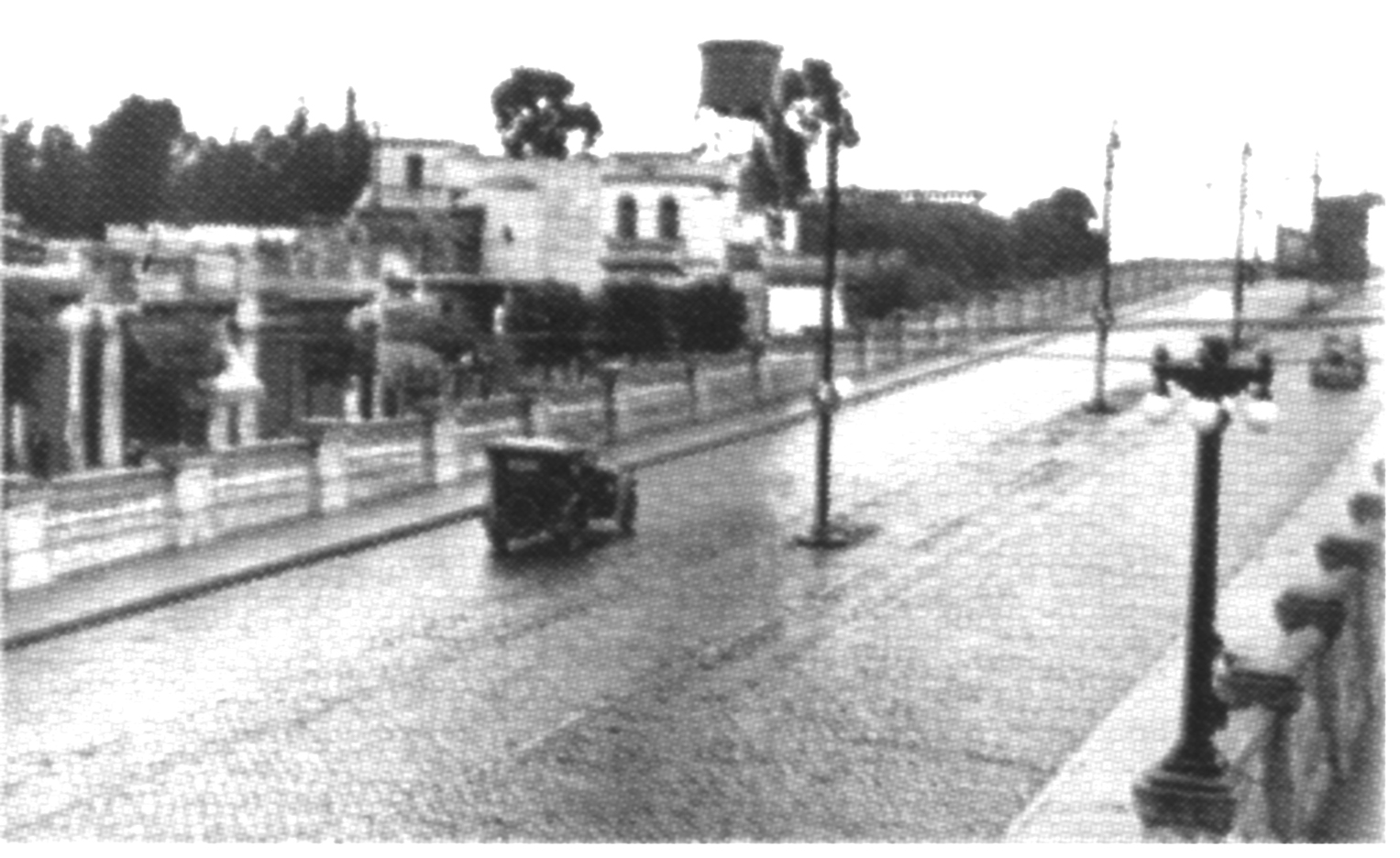
Before the end of 1700, these lands belonged to the Jesuits, after they were confiscated by the state and in 1827, then President Bernardino Rivadavia founded the town of Chorroarín by bringing German settlers, but the idea failed. Then in 1833 it was decided to distribute farms to settlers who came from the Canary Islands, who were strong in agriculture. In 1855 he sold this land to the Administrator of the Chacarita since the time of Rosas, Juan Farias. Around 1900 he began to empedrarse built with granite cobblestones in the middle of the road a bed of 8 meters wide, which then placed the tracks for trams Lacroze. It was named for some, the request for an Insurance Company "La Paternal", who owned many lands in the area, where he built many houses for workers. Others think that the name was given by a general store, known because it stopped the wagons that were to Luján through the "Road to Brown".
On July 12 of each year is established as "Quarter Day Paternal".Barrio was born with a factory, city space that was once one of the bastions of the industry and a place full of houses in which they were wineries, wine stores and not by chance called San Martin railroad that carries his line from the Buenos Aires to Mendoza province on the border with Chile to the west or west of the country and about 1100 kilometers from Buenos Aires, where is the birthplace of internationally famous Argentine wine, crosses his heart to the neighborhood of La Paternal, then there wineries were installed from this point, near the geographical center of the city distribute their products.with over the years several of these wineries were for different reasons shutting its doors.
Beyond the established official boundaries, like what happens in several neighborhoods of the city, La Paternal extends in the imagination of those who live a few blocks beyond its borders, with such clear sense of ownership in Villa Mitre or near San Martin Avenue and Avenue John B. Right. While the classic association in the collective subconscious "Argentinos Juniors - La Paternal" (which is also based upon previous playing fields of red bugs) in the cold paper would be refuted [citation needed], because they are from the 1940 stage in the block bounded by Boyaca, San Blas, JA Garcia and Hawk, in the territory of Villa Mitre.
The new Law of Municipalities of the City of Buenos Aires located in these two neighborhoods (La Paternal and Villa General Mitre) in different districts
2.4 km ² surface
limits Chorroarín
Av Del Campo
Garmendia Av
Warnes
Resume
San Martin Avenue
Alvarez Jonte
hawk
Arregui
San Martin Avenue
population
• Total 20,053 inhabitants.
• Density 8,355 inh. / Km ²
Day 12 July neighborhood
Located at the geographical center of town facing south-eastThis delimited the arteries:Limits and review of the district: Chorroarín Av, San Martin Avenue, Arregui, Gavilan, Álvarez Jonte Avenue, San Martin Avenue, Resume, Av Warnes, Av and Av Field Garmendia.
Before the end of 1700, these lands belonged to the Jesuits, after they were confiscated by the state and in 1827, then President Bernardino Rivadavia founded the town of Chorroarín by bringing German settlers, but the idea failed. Then in 1833 it was decided to distribute farms to settlers who came from the Canary Islands, who were strong in agriculture. In 1855 he sold this land to the Administrator of the Chacarita since the time of Rosas, Juan Farias. Around 1900 he began to empedrarse built with granite cobblestones in the middle of the road a bed of 8 meters wide, which then placed the tracks for trams Lacroze. It was named for some, the request for an Insurance Company "La Paternal", who owned many lands in the area, where he built many houses for workers. Others think that the name was given by a general store, known because it stopped the wagons that were to Luján through the "Road to Brown".
On July 12 of each year is established as "Quarter Day Paternal".Barrio was born with a factory, city space that was once one of the bastions of the industry and a place full of houses in which they were wineries, wine stores and not by chance called San Martin railroad that carries his line from the Buenos Aires to Mendoza province on the border with Chile to the west or west of the country and about 1100 kilometers from Buenos Aires, where is the birthplace of internationally famous Argentine wine, crosses his heart to the neighborhood of La Paternal, then there wineries were installed from this point, near the geographical center of the city distribute their products.with over the years several of these wineries were for different reasons shutting its doors.
Beyond the established official boundaries, like what happens in several neighborhoods of the city, La Paternal extends in the imagination of those who live a few blocks beyond its borders, with such clear sense of ownership in Villa Mitre or near San Martin Avenue and Avenue John B. Right. While the classic association in the collective subconscious "Argentinos Juniors - La Paternal" (which is also based upon previous playing fields of red bugs) in the cold paper would be refuted [citation needed], because they are from the 1940 stage in the block bounded by Boyaca, San Blas, JA Garcia and Hawk, in the territory of Villa Mitre.
The new Law of Municipalities of the City of Buenos Aires located in these two neighborhoods (La Paternal and Villa General Mitre) in different districts


a conversation with my house mate Dario Andres Rosalini 3-7-2012
 After three weeks time I can communicate with him without google translate, the first conversations we had where only with google translate. I have to take private lessons in Spanish to communicate with the people in La Paternal. Many of the people here don't speak English so it is up to me to invest time in trying to understand the way of living and trying to get a the deeper sense of understanding the people in el Barrio ( the neighborhood). The first three weeks I have been only observing the houses the life on the streets and the sounds. The barking of the dog that lives in the hall way penetrated many moments of my process trying to work on my conceptual approach of the project. The first thing for me two do was to scale the original sea journey from 13.750 km to 1375 meters, you can see this on the map that I posted earlier this month. In this way I believe that the journey gets a relation with the original sea travels made by my granmother. Another aspect is the amount of time that was spent on the boat which was approximately one month. I will spend the same amount of time on the project as the journey lasted inspired by an old shipping diary I found in the national archives in The Netherlands. The map will guide me to see which houses are involved into the project.
Screenshots made of Dario's computer, the photo's are made by him as well.


Rephrasing a
memory
In my project
I’m inspired by my grandmothers sea travels from Indonesia to Holland. She was
born in The Netherlands and returned to Indonesia where her parents originally
came from. At the age of 7 until she was 28, she continually travelled by sea
with the boot until she decided to migrate to The Netherlands with her two sons
when she was 28. Since she was at
the age of 28 she stayed in The Netherlands and never wanted to return to any
southern country because of the cockroaches.
When I will
arrive in Buenos Aires I will be 28 as well and want to work with all the
details of her sea travels. In one way I will try to construct these memories
with the help of people I meet in La Paternal. With the help of geographical
coordinates I will try to create a route that corresponds with the sea travels
of my grandmother in the neighbourhood of La Paternal.
In another way
I want to find people who are willing to share there memories of migration in
their family with me. First I would like to make several interviews with people
about those memories. After these interviews I would work on the constructions
of these memories in a visual way with the help of photography and moving
image.
I would be
extremely happy to collaborate with people who are willing to share their
memories and work on this project.
Many regards,
Sarojini Lewis


I am inspired to work with particular plant species from La Petite Amazonie and the residents living in Malakoff. Together with a botanist, I go in search of typical plants of the area to place them in the apartments of people I meet during my stay.
The plants will live in different rooms that each have a different perspective on the Péage Sauvage.


working on a project with artist group Observatorium
The Centrum Beeldende Kunst Rotterdam (Rotterdam Center for Visual Arts) has invited young photographers Sarojini Lewis and Stacii Samidin Ramelan, both living in Rotterdam, to portray people living around the Petite Amazonie. In march they visited Nantes to spot situations and arrange meetings. The mix of art and documentary photography derives from a concern for the world and a love for daily life, all be it that many of their work could be called surrealistic. This summer they will do their photographic survey and of course use the Péage Sauvage for a portfolio presentation and a lecture. An exhibition of their work both in Rotterdam and in Nantes is in preparation.
Subscribe to:
Posts (Atom)


